Acupuncture & Cupping: calm your nervous system, restore your balance.
An ancient healing system backed by modern science, designed to bring your body back into balance so it can do what it already knows how to do: heal.
An ancient practice, still growing.
Acupuncture
Acupuncture uses very thin, sterile, single-use needles — about 1/100th the size of a blood-draw needle — placed at specific points along meridians, the energy pathways that run through the body. Most people feel little more than a light tap, and many find the experience deeply relaxing.
Your Traditional Chinese Medicine (TCM) diagnosis is built from your symptoms, your pulse and your tongue, giving your practitioner a picture of where energy is blocked or imbalanced and what your body needs to restore flow.
Fire Cupping
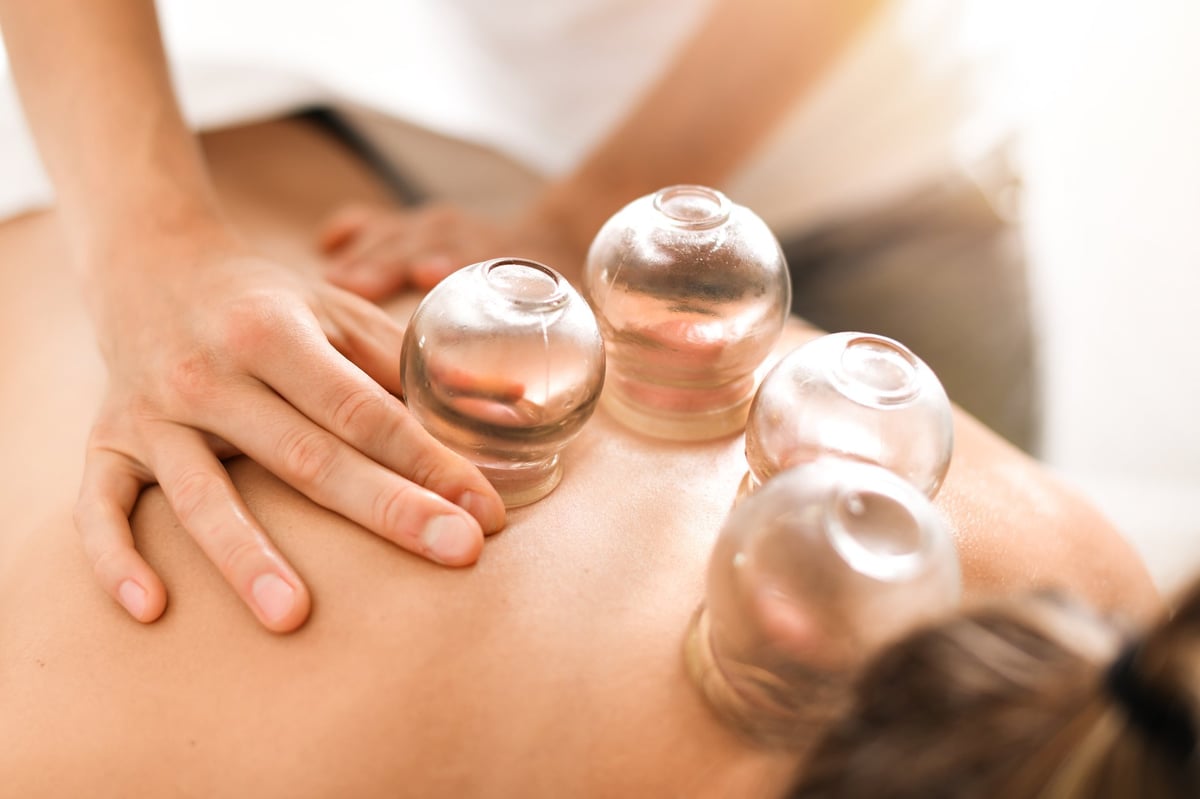
Glass cups are briefly heated and placed on the skin, creating gentle suction that draws blood flow to tight, stagnant areas. Cupping releases muscle tension, reduces pain and promotes circulation. The round marks fade within a few days.
Gua Sha
A smooth-edged tool is used to apply gentle, repetitive pressure along the skin, breaking up fascial adhesions, releasing tension and stimulating microcirculation. Often combined with cupping and acupuncture for a fuller treatment.
What the research tells us.
From a TCM perspective, acupuncture regulates energy flow and organ-system balance. Modern research adds another layer of understanding.
Nervous system regulation
Research shows acupuncture influences the release of key neurotransmitters including dopamine, serotonin, endorphins and norepinephrine, helping shift the body from stressed and guarded to calm and open.
Reduced inflammation
Acupuncture has been shown to reduce systemic inflammation markers. For conditions driven by chronic inflammation (autoimmune, chronic pain, metabolic issues), this can be a significant part of the therapeutic picture.
Cortisol regulation
Acupuncture helps regulate the HPA axis and cortisol rhythms. For people dealing with burnout, anxiety, insomnia or adrenal fatigue, regular sessions can help restore a healthier stress-response baseline.
Rest & digest activation
By stimulating the vagus nerve, acupuncture helps shift the body into a parasympathetic state: the 'rest and digest' mode where real healing and repair happen.
What to know
Acupuncture is cumulative. Most people need 4 to 6 sessions to assess benefit. Some feel a shift after one treatment; for others, change builds gradually as the body responds and rebalances.
Often paired with other modalities. Depending on what you need, your session may combine acupuncture with red or infrared light therapy, cupping, gua sha, or e-stim for a more complete treatment.
Designed around your comfort. Sessions can include calming music or guided meditation, and you set the pace. Many people find acupuncture deeply relaxing and look forward to their sessions as a reset in their week.
Accessible care.
TCM Evaluation & Custom Treatment
90 minYour first session includes a full TCM assessment (pulse, tongue, history) and a custom treatment designed around your diagnosis.
$115
Follow-Up Session
60 minOngoing sessions to maintain progress, adjust your treatment and deepen the work.
$95
Package of 5 Sessions
Best valueFive 60-minute follow-up sessions at a discounted rate: the ideal way to get the cumulative benefit.
$400
Acupuncture is eligible for HSA and FSA reimbursement. Superbills are provided upon request.
Ready to feel balanced again?
Whether you're new to acupuncture or it's already part of your wellness routine, your body knows what it needs: sometimes it just needs a little help getting there.